2009-02-27

Knize Ten - the classic leather


Russian version - click here

Image - Richard Armitage, comes from http://www.gamespot.com

Knize Ten – is a classic leather perfume that seems to remain untouched by the perishing influence of time. Its quiet and discreet box in black and white haven’t been attracted my attention for a ling time. I was getting to know Montale, Lutens, L’Artisan passing the Knize Ten by all the time. But the quality doesn’t have to be advertised. It always finds you if you start looking for it. Once I heard about Knize Ten from Andy who named it as an example of a well-made leather.

But even than I didn’t dare to buy it. First it was a not friendly Big Leather Monster playing on the edge of my olfactory receptor cells. On my skin it gave a thick cuminic leathery note, didn’t want to reveal its beauty threatening me and people around me with a knock-out. But once I just bought it under the influence of an unclear gust. May be I finally found a tamer in myself who made Knize Ten finally surrender. I couldn’t even imagine before how many notes and nuances could be found each time it opens on the skin.

In the beginning it’s a fresh citrus with a note of engine oil. As if a car repairman would give you a cup of Earl Gray in his garage. On the skin it opens with a fresh note of herbs bounded with a leather ribbon and a fresh cool note of early morning in the autumn. Luca Turin speaks about a splendid strawberry note. First I couldn’t recognize it and found a jasminic fruitiness, but after reading the Guide it revealed itself – a fresh, fragrant strawberry without cream or sugar.

Leather in Knize Ten is playing cat and mouse game. Sometimes it dominates and later it goes to the backgrounds giving the place for a beautiful floral heart with a strawberry nuance.

I also found a nice Jasmine there – fruity floral with a nice indolic beastliness and tropical fruity sweetness. Generously seasoned and softened with a drop of cream. But there is no Jasmine shown in the pyramid. Well, may be my nose loves the jasmine so much, that it just creates it in Knize Ten from the floral rose and carnation mixed with fruitiness of strawberry, borrowing the indolic note from leather, a drop of cream from sandalwood and a pinch of sugar from vanilla? I also found nice rose petals there, but no carnation. May be it conceals itself under the mask of jasmine. Or it integrates completely with the spicy leather note.

Iris of Knize Ten has a woody-ionone character. It becomes very aggressive if you put too much of the perfume on your skin.

And the leather again. It looks like there is more than one. I smell a bitterness of rough tar leather of a saddle. But also a soft dressed leather of a travelling bag. Nicely supported with amber note – warm with only a touch of sweetness.

Cumin – I smell a lot of it. A pinch of cumin may be used to give a musky smell of skin. But there is so much in Knize Ten. It comes and goes. And may be there is no cumin at all – it’s not shown in the pyramid by the way. :o)

Sometimes I think that you can analyse the notes of Knize Ten again and again and it always comes with something news. But being analysed it falls into the peaces that begins to play hide and seek and later comes together again and begin to show the images…

2009-02-19

What does leather do to you?

Well, after a rose I am on a leather wave. Not for nothing.

First of all I was reminded by Andy about a very nice classic leather - Knize Ten. This perfume was often too much to me with its powerful leather with a good pinch of something like "cumin". But now it's tamed on my skin and opened all its beauty.

The second is that I've got some nice aromachemicals - Castoreum base and Safraleine molecule from Givaudan. Wow! I do really like the soft leathery or even suede-like smell of Safraleine. It's much softer and finer than rude shoe leather of isobutilquinoline. Castoreum gives it a nice animal character. I even blended those notes with one of variety of my rose accord and made a sketch of Rose in Leather perfume...

Well, later I hope to review Knize Ten and describe the aromachemicals I've got. And now a question to you all from a funny commercial:

What does leather do to you?

2009-02-13

Rose III: the finishing touch


Russian version - click here

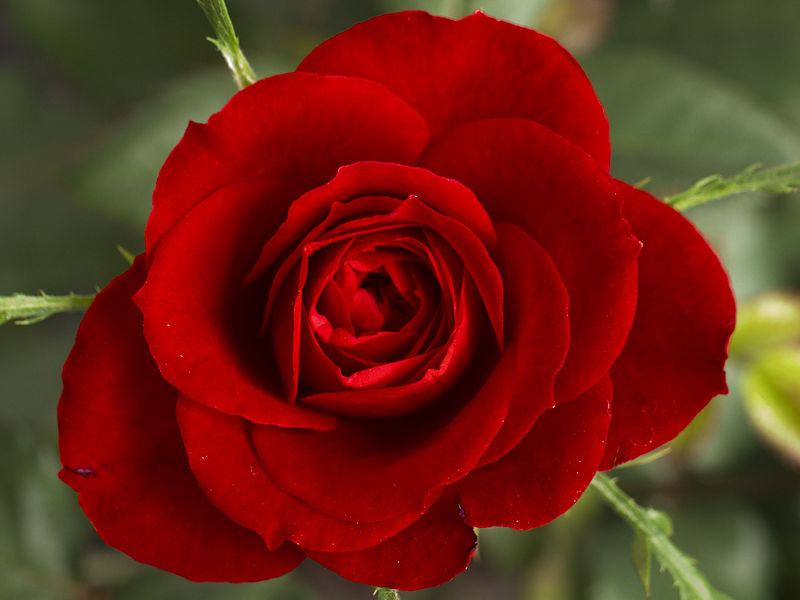
Image - a small red rose from Wikimedia

The introducing or rose alcohols to the first rose formula, hopefully made it softer, more floral and more rosy. But may be also more citronella like – depends on the quality of the rose alcohol used. There are some other important aromachemicals that might give this rose a finishing touch.

Rose oxide – is a very important aromachemical. Naturally less that 0.5% of this chemical can be found in a rose oil, but because our nose is 80 times more sensitive to it compared to citronellol, the influence of Rose oxide is comparable to that of citronellol. Commercial product consists of different isomers and may vary in purity grades. If you smell it even in 10% dilution you probably never link this gassy smell to a rose. Books says that the rose or geranium like odour can be noticed by extreme dilution or when used in a rose accord in low concentrations. The change rose oxides makes to a rose accord is subtle but noticeable. Use 0.5% or less in the rose accord and try to smell the difference.

Rose crystals or Rosone – is an nice fixative for a rose. It has a very difficult chemical name – trichloro methyl phenyl carbinyl acetate that you can find in some rose formulae. Also known as Rosatol, Rose acetale, TCMBA (guess where this comes from), Rosacetate, Rosalina etc. This one has a weak rosy odour with green nuances. It smells like “another variant of PEA” and you tend to underestimate this material as at first it may seem to have little or no influence to the rose compositions. The best is to compare the smell of pure PEA with a smell of PEA with 5% of Rose crystals added. Comparing two smelling strips I found that Rosone enriches the smell of PEA making the rosy smell more prominent and powerful. So, 2-4% of the rose crystals in the formula can give power to the rose and make it more long lasting. As I already have mentioned before – Vetiver oil, Guaiacwood oil and Cedarwood oil may also be used as fixatives in rose accords.

Beta-Damascenone – another very important rose chemical. Naturally it occurs in a rose oil at about 0.14% concentration. But the human nose is 55 times more sensitive to beta-damascenone compared to the rose oxide. Or 4400 times compared to citronellol. Thus, beta-damascenone makes almost 70% of the rose smell. This is an expensive aromachemicals that restricts it use in perfumery. You don’t find it in often in the rose formulae. A similar aromachemical Damascone (especially beta) may also be used, but it’s still expensive. It has a pleasant fruity floral odour recalling the smell of plum or a bit blackcurrant. I never compared damascones and damascenones, so, I don’t know if beta-damascone reaches the same effect in a rose as beta-damascenone, but 0.05 – 0.3% of it brings a nice fruity nuance to a rose accord.

Aldehydes and alcohols – waxy fatty notes of aldehydes finishes the top note of the rose smell giving some nuances of fatty rose petals of the fresh flower. Different aldehydes or alcohols might be used for that purpose (C8 – C12) in concentration of 0.01 – 0.2%.

Rosalva – is an unsaturated alcohol with ten carbon atoms (but don’t confuse it with Alcohol C10). This is an aromachemical with a rosy odour and fatty waxy nuances. Good to combine with aldehydes. To my nose possesses a harsh metallic note, but I haven’t found it back in a rose accord. Nice finishing touch to a rose.

Green notes – are also very common in rose accords. The simplest two are the leaf alcohol (cis-3-hexenol) and PADMA (Phenyl Acetaldehyde Dimethyl Acetal). The first one has a green fresh smell of a grass and the second one recalls a more sharp radish-like smell of arugula (rucola, rocket). One of them or both can be used to give some fresh nuances of green notes. Leaf alcohol is stronger than PADMA and should be used in lower concentrations – 0.1-0.3% for leaf alcohol and 0.2-1% for PADMA.

Naturals – are the best enhancers of almost any perfume. Rose oil and absolute are widely used in the rose accords. But a cheaper Geranium or Palmarosa oil is also a common natural constituent in a rose formula. Should be used up to 1-2%. Sometimes less sometimes more.

Well now our rose formula consists from about 15 ingredients. And this is a nice number for a good rose base. Enough space to play. Enjoy!