Posts tonen met het label formula. Alle posts tonen

2009-11-11

Sharing my chypre experiment

Last time I was experimenting with a Chypre formula. The one from “An introduction to the perfumery” by Curtis. The original formula:
Bergamot FCF – 15
Sandalwood – 8
Vetiver (Bourbon) – 6
Oakmoss absolute decolorized – 5
Rose base – 6
Jasmine base – 5
Gamma-methyl-ionone – 3
Patchouli – 5
Musk-ketone – 3
Clary sage – 2
Neroli oil reconstructed – 2

Well, first of all I made a basic reconstruction of this formula using synthetic Sandal base and took just a couple of essential synthetics molecules for each of the mentioned bases (like PEA+citronellol+geraniol+rosone for the rose base). I also used a little bit of natural jasmine and rose absolutes as well as rose and neroli oils to brighten up the formula. Here there are conclusions I made before I’ll start on the second version:
- It’s very important to work separately on floral heart and balance it well before mixing with the chypre base.
- It’s also important to use naturals in the floral heart to make it strong enough to be able to compete against the strong chypre base (made off almost naturals only).
- Labdanum resinoide is in my opinion essential in a chypre – it gives a very soft ambery note and softens the oakmoss.
- I would be more careful with Clary Sage next time and may be even omit it.

Another interesting experiment was to create a natural chypre fragrance based on this formula. Well – it’s easy to think that you can just substitute the bases with the corresponding amounts of rose, jasmine and neroli oils and absolutes. But there is a problem – those precious and powerful essences and require very delicate balance – using just 6 parts of rose absolute and 5 part of jasmine absolute instead of rose and jasmine bases would result in a an "overrosed" accord. So, it’s very important to work carefully on the floral heart and balance it before mixing with the chypre base.

Methyl ionone is not an easy one to substitute with naturals – it is used not only as an iris-violet note, but also as a bridge between the woody and floral accords. Next to iris absolute or concrete there is also a Guaiac oil. It doesn’t smell like ionone at all, but it possess the function of the bridge between woody and floral notes. I used Guaiac oil with some Iris CO2 absolute.

Musk ketone can be substituted by natural musk or ambrette seed absolute. I only had ambrette seed tincture, so I used this one.

It was also interesting to create a “low budget natural formula” – to see if it’s possible to make a basic chypre using just the smallest amounts of expensive rose, jasmine and neroli oils and absolutes. For this formula I took just a drop of palmarosa and geranium oils (as a “rose” part), ylang-ylang oil (as a "jasmine" part) and petitgrain (as "neroli" part). I added some lavender oil to accompany the clary sage and geranium as well as some lime oil to accompany bergamot. Labdanum resinoide is really important chypre compound, so I added it too. Of course I used jasmine absolute, rose oil and absolute, neroli and iris CO2 just enough to add a finishing touch. Guaiac oil (as well as a touch of iris CO2) was used instead of methyl-ionone.

Well, my “low budget” formula was surprisingly pleasant. Definitely masculine, somewhat ascetic, deep and not cheap at all. It has character.

And there is something else I discovered about perfume. The better it’s balanced and the more natural ingredients are used the more intense is the emotional influence of the perfume. Like the last chypre I described – the feel of silence and restfulness filled me in at the moment I inhaled it.

P.S. Please, be aware of fact that amounts of oak moss used in this formula is higher than IFRA restrictions.

2009-06-03

Muguet - could it be natural?


Image: Muguet by Guerlain (from Diane James homepage)

As I mentioned in my previous entry, the lily-of-the-valley odour in perfumery is made from the synthetic materials. Hydroxycitronellal is known in perfumery since the beginning of the former century. But how did perfumers make the muguet note before the synthetic era when almost all perfumes were made of naturals?


What naturals can imitate the smell of lily-of-the-valley? Well, jasmine smells close. And some perfumers mention that diluted ylang-ylang oil smells like muguet as well. I have tried a 1% solution of ylang-ylang oil in alcohol and indeed it has a resemblance with lily-of-the-valley. Cardamom is another ingredient used in muguet formulae.

Here is an example of lily-of-the-valley formula from an apothecary magazine from 1892:

Extract of jasmine – 200 g
Extract of ylang-ylang – 100 g
Alcohol 95% – 200 g
Powdered cardamom – 5 g

After two days of maturation of cardamom powder in alcohol solution of jasmine and ylang extracts, the blend becomes to achieve the resemblance with lily-of-the-valley odour.

Extracts are probably the alcohol tinctures of fragrant materials. For flowers it would probably be the pomade. But may be the ylang-ylang extract can be substituted by essence (a alcohol solution of ylang-ylang oil). I haven’t tried this formula yet, but would give it a chance as soon as I get the jasmine pomade to make an extract.

2009-02-13

Rose III: the finishing touch


Russian version - click here

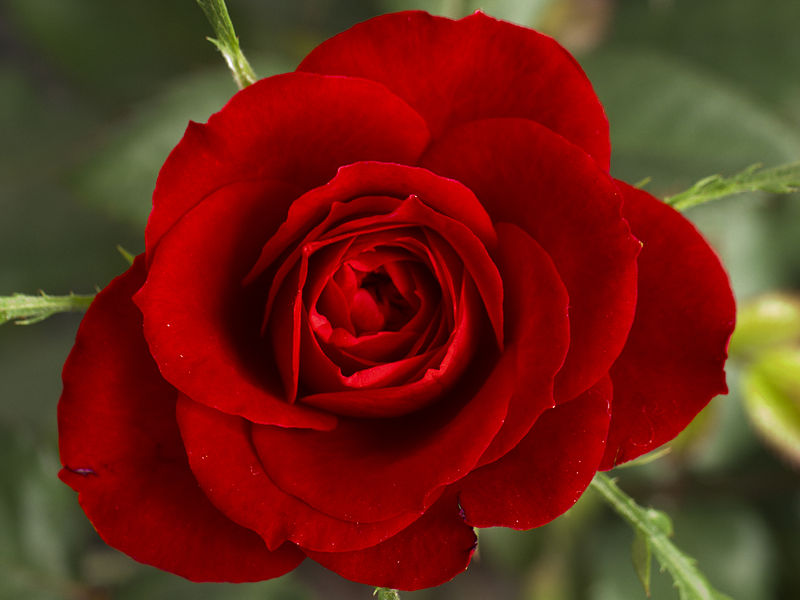
Image - a small red rose from Wikimedia

The introducing or rose alcohols to the first rose formula, hopefully made it softer, more floral and more rosy. But may be also more citronella like – depends on the quality of the rose alcohol used. There are some other important aromachemicals that might give this rose a finishing touch.

Rose oxide – is a very important aromachemical. Naturally less that 0.5% of this chemical can be found in a rose oil, but because our nose is 80 times more sensitive to it compared to citronellol, the influence of Rose oxide is comparable to that of citronellol. Commercial product consists of different isomers and may vary in purity grades. If you smell it even in 10% dilution you probably never link this gassy smell to a rose. Books says that the rose or geranium like odour can be noticed by extreme dilution or when used in a rose accord in low concentrations. The change rose oxides makes to a rose accord is subtle but noticeable. Use 0.5% or less in the rose accord and try to smell the difference.

Rose crystals or Rosone – is an nice fixative for a rose. It has a very difficult chemical name – trichloro methyl phenyl carbinyl acetate that you can find in some rose formulae. Also known as Rosatol, Rose acetale, TCMBA (guess where this comes from), Rosacetate, Rosalina etc. This one has a weak rosy odour with green nuances. It smells like “another variant of PEA” and you tend to underestimate this material as at first it may seem to have little or no influence to the rose compositions. The best is to compare the smell of pure PEA with a smell of PEA with 5% of Rose crystals added. Comparing two smelling strips I found that Rosone enriches the smell of PEA making the rosy smell more prominent and powerful. So, 2-4% of the rose crystals in the formula can give power to the rose and make it more long lasting. As I already have mentioned before – Vetiver oil, Guaiacwood oil and Cedarwood oil may also be used as fixatives in rose accords.

Beta-Damascenone – another very important rose chemical. Naturally it occurs in a rose oil at about 0.14% concentration. But the human nose is 55 times more sensitive to beta-damascenone compared to the rose oxide. Or 4400 times compared to citronellol. Thus, beta-damascenone makes almost 70% of the rose smell. This is an expensive aromachemicals that restricts it use in perfumery. You don’t find it in often in the rose formulae. A similar aromachemical Damascone (especially beta) may also be used, but it’s still expensive. It has a pleasant fruity floral odour recalling the smell of plum or a bit blackcurrant. I never compared damascones and damascenones, so, I don’t know if beta-damascone reaches the same effect in a rose as beta-damascenone, but 0.05 – 0.3% of it brings a nice fruity nuance to a rose accord.

Aldehydes and alcohols – waxy fatty notes of aldehydes finishes the top note of the rose smell giving some nuances of fatty rose petals of the fresh flower. Different aldehydes or alcohols might be used for that purpose (C8 – C12) in concentration of 0.01 – 0.2%.

Rosalva – is an unsaturated alcohol with ten carbon atoms (but don’t confuse it with Alcohol C10). This is an aromachemical with a rosy odour and fatty waxy nuances. Good to combine with aldehydes. To my nose possesses a harsh metallic note, but I haven’t found it back in a rose accord. Nice finishing touch to a rose.

Green notes – are also very common in rose accords. The simplest two are the leaf alcohol (cis-3-hexenol) and PADMA (Phenyl Acetaldehyde Dimethyl Acetal). The first one has a green fresh smell of a grass and the second one recalls a more sharp radish-like smell of arugula (rucola, rocket). One of them or both can be used to give some fresh nuances of green notes. Leaf alcohol is stronger than PADMA and should be used in lower concentrations – 0.1-0.3% for leaf alcohol and 0.2-1% for PADMA.

Naturals – are the best enhancers of almost any perfume. Rose oil and absolute are widely used in the rose accords. But a cheaper Geranium or Palmarosa oil is also a common natural constituent in a rose formula. Should be used up to 1-2%. Sometimes less sometimes more.

Well now our rose formula consists from about 15 ingredients. And this is a nice number for a good rose base. Enough space to play. Enjoy!

2009-02-12

Introducing the rose alcohols


Russian version - click here

Image: a picture of a nice rose alcohol from http://www.craftdistillers.com

Rose alcohols are Citronellol, Geraniol and Nerol. They are major constituents of the rose oil and important aromachemicals in making of a rose accord (commonly used together with phenyl ethyl alcohol). A rose oil contains about 30-40% of citronellol, 20% of geraniol and 5% of nerol.

A rose accord formula may contain various proportions between PEA, citronellol and geraniol. Nerol is less common, but still widely used in rose formulae. Even the natural raw materials contains those materials in different proportions. The rose oils contains about 1% PEA, 35% of citronellol and 20% of geraniol that brings us to 1:35:20 ratio. And the absolute contains about 40-70% PEA, 6% of citronellol and 3% of geraniol that makes the ratio looks like – from 13:2:1 to 23:2:1.

If I see the 13:2:1 ratio I get an idée that the previous formula consisted of 15 druppels PEA can be enriched with 2 drops of citronellol and 1 drop of geraniol. And the amount of those alcohols can be gradually increased till I get the more rosy smell. In general the average amounts of those aromachemicals used in rose accords are – 20-60% PEA, 5-35% citronellol and 5-20% of geraniol. But the problem is that when you use rose alcohol you can get an unpleasant citronella nuance that you don’t really smell in a rose flower. Let’s have a closer look at those chemicals.

Citronellol – its smell is described as a fresh floral clean rose. But wait – I do smell citronella undertone. It’s time for some chemistry. Citronellol is a molecule that has different isomers (the compounds with similar chemical formula, but different structure). Citronellol has alpha and beta isomers and also so called stereo isomers. The first ones are a bit less important, but stereo isomers are much more interesting in perfumery – because of their structure they look like right and left hand – almost the same, but still not superposable – they are a mirror image of each other – they are called d-citronellol and l-citronellol (you may also find them as (+)-citronellol and (-)-citronellol). If you like more information on stereo isomers, please, visit a Wikipedia link - http://en.wikipedia.org/wiki/Enantiomer The d-citronellol is found to be a natural compound of citronella and ginger-grass oil. l-citronellol is a major compound of a rose oil. Both occurs in geranium oil. As aromachemical you can buy either citronellol (that contains of both l- and d- isomers and called racemic) or l-citronellol. Although the most properties of stereo-isomers are the same, the perfumery books say that l-citronellol is sweeter than racemic, has clean rosy top note and has no “mint” notes. But there is another factor that is responsible for the smell variations of different citronellols bought by different suppliers. Citronellol can be obtained by different ways – some of them gives a better quality products containing almost no impurities and other ways give citronellol of a lower grade with more impurities contributing to the smell. For example, racemic citronellol can be obtained from citronella oil by hydrogenation of geraniol component. If it’s not purified properly, you may get some other citronella constituents in citronellol. The purest citronellol is obtained chemically by reduction of citronellal. So, if you can get citronellol from different supplier – it’s important to compare the quality of their products and to choose the good one.
Citronellol can be used in rose (red and white), lily, lily of the valley and other floral accords.

Geraniol is another rose smelling aromachemical with fresh mild sweet rosy odour and dry rose-petals undertone. To my nose it reminds a bit of dried rose hips. Sometimes you can also catch some citronella notes. Geraniol occurs naturally in many essential oils like Geranium, Rose, Palmarosa, and Citronella and can be isolated from the last two oils. But it can be also made synthetically from Citral. Thus, the quality of Geraniol may also vary depending on impurities. For examle, Geraniol from Palmarosa oil is preffered to the one from Citronalla oil.

Rhodinol is the most complicated aromachemical as the word Rhodinol is used to describe a whole group of chemicals. In the first place this name was given to an impure compound isolated from rose otto. Latter it becomes a kind of synonym to the rose alcohols derived from essential oils. For example, l-citronellol isolated from Geranium oil can also be sold under the name of Rhodinol. Rhodinol C or Rhodinol ex Citronella mostly refers to a purified Citronellol from Citronella oil. Rhodinol coeur or Rhodinol ex Geranium refers to a mixture of rose alcohols from Geranium oils. Rhodinol can be found in various rose formulae – it’s used as a substitute of rose otto, geranium oils or as citronellol or rose alcohol mixture. It’s very important to collect information on Rhodinol from the supplier and figure out what kind of Rhodinol he is selling. And of course – it’s useful to compare the quality from the different suppliers.

If I compare my Rhodinol ex Citronella from the Perfumers World with Citronellol (also from the Perfumers World), I’d say that I definitely smell some Geraniol in Rhodinol, so it’s not a higher grade of citronellol, but a mixture of rose alcohols. And they both has unpleasant citronella nuances to my nose. So, I think I need to compare the suppliers and to search for a better quality.

2009-02-11

Making of a rose accord: the beginning


Russian version - click here

Image - dried roses to illustrate the PEA odor found on http://www.your-healthy-gardens.com/drying-roses.html

Phenyl ethyl alcohol (PEA) is one of the most famous and important aromachemical possessing the rose odour – soft sweet rose with green notes recalling a smell of dried rose petals. It naturally occurs in rose absolute (making 40-70% of it). However the rose oil has almost no phenyl ethyl alcohol – just several percents. Phenyl ethyl alcohol in perfumery is widely used in many floral compositions – rose, lily of the valley, jasmine and many others. A rose formula can contain a huge amount of PEA – in some cases it can be the only rose-constituent like shown in a formula below.

The foundation perfumery course form the Perfumers World suggests a simple rose formula based on phenyl ethyl alcohol:

PEA – 15
Methyl ionone – 3
Clove oil – 0.5 (or Eugenol - 1)
Cedarwood oil – 1

This formula is a part of the foundation perfumery course - you can follow it free of charge at the Perfumers World.

Let’s see the role of other ingredients.

Methyl ionone is an iris or violet smelling chemical. It doesn’t occur naturally in rose, but there is another aromachemical with a similar smell that is a natural rose oil and absolute constituent – beta-ionone. There is only 0.03% of it found in a rose oil, but even such a tiny amount of beta-ionone contributes significantly to the rose odour. Our nose is very sensitive to beta-ionone almost 100 000 times more sensitive than to phenyl ethyl alcohol. Because of that even 0.03% of beta-ionone makes about 20% of the rose odour. More information on that interesting fact can be found at http://www.leffingwell.com/rose.htm
Methyl ionone and alpha-ionone can be used in rose formulae instead of beta-ionone. Methyl ionone has a woody undertone that makes it a perfect bridge between the woody notes and florals (especially red flowers).

Eugenol or clove oil (can contain up to 90% of Eugenol) gives the rose a spicy note. A similar aromachemical – methyl eugenol naturally occurs in a rose oil together with eugenol itself.

One drop of Eugenol can be used instead of 0.5 drop of Clove oil. Both are used to bring a spicy note to the rose accord. Too much eugenol makes the rose smell not only spicy, but also old, dry and a bit dirty – think of dried roses and cloves.

Cedarwood oil is a fixative for the rose accord. Another woody notes can be used like Sandalwood, Vetiver, Pathouli or Guaiac oils.

When I made a rose accord by this formula I was very disappointed by its smell. Nothing like a real rose. Of course I could expect that a rose accord made from four aromachemicals can not smell like a real rose consisting of about 350 ingredients. But it still can be a part of a more complicated rose accord. And some formulae shows that a nice rose base can be made of 10-20 ingredients. So, the next step is using of the rose alcohols to give some freshness to a drying rose.

2009-02-04

Hyacinth: the way it's made


Russian version - click here

Image - a nice hyacinth close-up view from http://commons.wikimedia.org

A Grand Damme asked me if I knew a chemical formula of hyacinth. Her question made me curious and I looked into the wise perfumery books as I found it time to make acquaintance with hyacinth. Its freshly green floral scent is what everyone needs now when spring is on its way. I haven’t complete my jasmine series yet there is no harm to start something new in between.

First of all it was interesting to find out that there is a natural source of hyacinth smell – unlike the lily of the valley, it’s possible to yield a hyacinth absolute by solvent extraction from fresh flowers. Although the pure absolute seem to posses a sharp unpleasant smell that becomes reminiscent of hyacinth only when diluted up to 0.1% and lower. Of course it’s nice to have a bottle of this curiosity for some experiments, but it’s not really easy to get one. Wise books mention Netherlands as one of the important producers of hyacinth absolute (as well as the most important hyacinth bulbs supplier). But I couldn’t find any Dutch supplier by searching for “hyacinth absolute” in goole. I couldn’t find it in assortment of two another reliable foreign suppliers – Liberty and White Lotus. Of course I’ve got some links where I could buy the hyacinth absolute, but adulteration of this product is very common and that is why it’s important to get a reliable supplier. So, if you know one who sells hyacinth absolute for a reasonable price, please, let me know.

According to the wise perfumery books the synthetic hyacinth is one of the easiest formula in perfumery. Technically you get a reminiscent of hyacinth when you mix rose, jasmine, lilac and lily of the valley components with some green notes. That is why I got a hyacinth note in my previous experiment almost automatically. The formula I was working with contained Lyral (lily of the valley), benzyl acetate (jasmine), phenyl ethyl alcohol (rose) and terpineol (lilac) and I mixed it with green notes of leaf alcohol, galbanum and other components.

I’d like to make an important notice here. Although I juxtapose aromachemicals and the floral smells in a previous paragraph to simplify my story, but it doesn’t give a good image of how those aromachemicals really smell. Terpineol doesn’t really smell like lilac flowers, benzyl acetate has a sweet pungent smell reminding of a solvent and phenyl ethyl alcohol smells like a decaying rose petals you’d like to throw away. But still those aromachemicals are the main building blocks for the corresponding floral smells when surrounded properly.

And to make it more complicated and to intricate it all (in the best traditions of perfumery) I should add, that there are eight basic aromachemicals that you can mix together in different proportions to get a skeleton of several different floral formulae. So, by mixing of phenyl ethyl alcohol, hydroxycitronellal, benzyl acetate, hexyl cinnamic aldehyde, citronellol, terpineol and indole you can get either jasmine or rose or lilac or lily of the valley. I think you can even get a rose (especially white rose) if you don’t use too much of benzyl acetate and indole.

The very first main components of hyacinth were bromstyrol and phenylacetic acid. Nowadays the phenylacetic aldehyde is the most important one. Its other name is Hyacinthin for it’s a little sharp green and fresh smell reminding of hyacinth flower. It is used in combination with cinnamic alcohol, benzyl alcohol and terpineol. Styrax, heliotropin and galbanum are used as fixatives. As I already mentioned the synthetic components of jasmine, rose, lilac and lily of the valley also may be used in hyacinth formula as well as natural oils or absolutes of jasmine and rose. One of the favorite naturals used to enrich the hyacinth formula is a precious and expensive narcissus absolute.

In a perfumery book I found two simple formulae of a hyacinth bases suggested to be used in a hyacinth perfume. The bases are simple, but the perfume suggests using amber and musk tinctures together with jonquil (narcissus) absolute. I have ordered the last one together with cetalox – one of the nicest modern amber substitute. Let’s see what I finally get.

By the way – if you have a good picture of hyacinth to illustrate this entry, please, let me know – I’d like to use it instead of a random goolge image.

2009-02-03

Nostalgy on vernal flowers


Russian version - click here

Image - hyacinths from http://hayefieldhouse.com/

February is a tricky month. You think the winter is almost over when you see the first snowdrops coming from the ground or buy the first hyacinth bulbs from the local florist. But February is still a cold winter month with its night frost and cold wind striking into the marrow. Warm and fresh florals is what we all need during those cold grey days.

I have to think of Mitsouko – a light, but deep fruity chypre created just after the war – a peak point when need for something light and beautiful was drawn to a head during the post-war devastation. Inspired by experiments of flacon007 I also decided to create this perfume following the formula presented on Linda Andrews’ website. I have got almost all the ingredients. It was interesting to start with mixing of two main contrasting components of almost any chypre – oak moss and bergamot. Only two components, but they make a recognizable core of a chypre fragrance. A couple of drops of peach aldehyde and the skeleton of Mitsouko is ready. Of course there is still a long way to make it a recognizable Mitsouko. I still can’t smell the “cookies” (it’s my personal olfactory association to recognize a chypre character). It was very interesting to discover a lot of herbs in this formula – tarragon, lavender, celery, coriander and chamomile. All together they brought a bit strange note to the fragrance that I recognize neither in a modern EdT nor in an old perfume. But there is a magic of maturation. Five days farther and this strange note is combined with a citrus freshness that is not that strong in any vintage perfume touched by time. I do recognize the “cookies”. Now the only thing I need is a suitable atomizer, dilution till EdP concentration and more maturation for another couple of weeks. And I am ready to meet the spring. There is still a strange note of plastic amber that I recognize in the base. Let’s see how it behaves on skin after the dilution and maturation.

There is one more thing I need to honour the spring – a smell of fresh verdure and hyacinths that are so popular in Balmain’s creations. On the website of a local supplier of ingredients for making of perfume, soaps, shampoo’s and other happy staff at home I found a simple formula of Des Fleurs Blanc:

8 ml alcohol
20 drops Lyral
18 drops fenylethylalcohol
12 drops benzylacetate
6 drops alfa terpineol
5 drops alfa ionone
5 drops benzyl salicylate
4 drops ylang ylang III oil

Des Fleurs Blanc are rich with benzyl acetate and gives a very concentrated sultry fragrance. To fixate the white florals I added some Peru balsem (it’s a perfect fixative for white florals next to Benzoin Siam), some vanilla and synthetic musk. The fragrance was reminding me a hot summer instead of soft fresh vernal breeze. Fortunately there are many green notes to bring freshness to a floral fragrance – I added some leaf alcohol together with it’s salicylic ether, a couple drops of galbanum and helional. Some calone and cyclamen aldehyde gave it some acquatic transparency. Modified Des Fleurs Blanc is a fresh fragrance with green notes of hyacinth that turns into sweet white florals with tender green nuances by the dry down. Well – all it’s need now is a suitable atomizer, dilution till 10-12% and some maturation.

2009-01-09

Jasmine: another couple of formulae


Russian version: click here

This is a practical illustration of a previous entry

I found a couple of jasmine base formulas (N1032 and N1033) and also a jasmine perfumes made from those bases (jasmine N1034). Unfortunately I don’t have all of the listed compounds. But improvising in perfumery is something you have to learn from very beginning.

Forlmula 1032. Colourless jasmine (bye-bye indole).

The core is amyl cinammic aldehyde and benzyl acetate (the jasmine radish) is diluted with linalool (making jasmine more fresh), phenyl ethyl alcohol (making it softer) and hydroxycitronellal (making the jasmine whiter and more watery). Diluted jasmine was smelling more lily or muguet like. But fortunately there is geranyl acetate (strong rosy pear) that can restore the strength of jasmine. A couple of drops of creamy fruitiness from peach aldehyde makes a modest sweet fruity jasmine with lack for indolic narcotic depth. But no indole in this formula – it should stay colourless. Ylang and cresol ethers should give some narcotic nuances. But para-cresyl phenyl acetate is used in the formula while I have only para-cresyl methyl ether. They are not really interchangeable and the aromachemical I have doesn’t posses the phenolic honey note, but I can compensate it with a drop of pehnylacetic acid – a famous phenolic honey note in perfumery. Ylang-ylang oil and para-cresyl methyl ether gave narcotic depth, but I still prefer the way indole would have done that. A finishing touch is a spiciness from ethyl cinnamate. I don’t have it, so I’ll use methyl cinnamate. That’s all.

As a result I get a clear almost colourless liquid (as it was promissed). This jasmine scent has striking fruity nuances and some lily-muguet elements. This jasmine posseses some fresh nuances, but in general it’s really heady and intensive. A drop of vanilla and amber and another floriental is born. There is a narcotic note, but less obvious as in live flower. I do miss indole here. The fruitiness of benzyl acetate is not sharp, but very sultry – it enfolds you like a doft warm shawl that can almost suffocate you. Let’s call it oriental lily of the jasmine.

Jasmine 1033.
I do have even less compounds or alternatives for this one. Improvising again. Or better say – always improvising. This formula uses some expensive naturals such as orris concrete and jasmine absolute.
The core is again a mixture of amyl cinnamic aldehyde and benzyl acetate. The jasmine radish it is. To dilute it the phenylethyl alcohol is used together with hydroxycitronellal. No linalool this time. And I’d say that without linalool this jasmine at this stage is much more muguet than the previous one. Methylionone is used here. Wow – adding a violet-iris component to jasmine sounds like something add and forbidden. And the result is also strange – meet the jasmine violet. Orris concrete does not help. But I remember, that the oil of ylang is very good in taming of ionones. And yes, after a couple of drops of ylang-ylang oil it finally smells jasmine. This formula uses indole that I have added with pleasure enjoying its narcotic depth. But than I had to use benzyl phenylacetate. I don’t have it and neither have heard about it nor smelled it. A book told me that it possesses a faint floral aromat and is used as a fixative. The only more or less close alternative I can think is benzyl alcohol. And may be a drop of honey again in form of phenyl aceteic acid. As a spicy component this formula suggests a carnation base. Well, eugenol with iso-eugenol would do the job. And unfortunately I did put too much of them – needed a better calculation work. Sorry, jasmine, you’ll become a spicy one.

The result is a spicy (be careful with eugenol next time) jasmine with a striking fruity note again and some lily and muguet elements. The deep indolic narcotic nuances are present, but they can’t compete with the strength of jasmine fruitiness.

Both of those jasmine formulas are suggested to be used to make a jasmine perfume 1034 by adding some naturals like absolutes of jasmine, rose and orange blossom. Natural tinctures of musk, amber and a drop of civet are used to create the base for this perfume. Unfortunately I don’t have the last naturals – only synthetic substitutes.

2008-12-30

Jasmine: first formula


Russian version - click here

Image: a sample jasmine formula made from synthetic components by AromaX

It’s interesting to notice that the first formula of a jasmine base seemed to be an attempt to reconstruct the jasmine absolute. It has was build from the same components in the similar proportions as it was known about hundred years ago. Here is the formula I found in a perfumery book. Its name is Jasmine base No.1:

Benzyl acetate – 130 (65%)
Benzyl alcohol – 40 (20%)
Linalool – 20 (10%)
Methyl anthranilate – 10 (5%)

There are some reasons why you can’t see cis-Jasmone and Indole there although they make a part of jasmine absolute formula as it was known in 1912. cis-Jasmone was synthesized in 1932, but it was a very expensive synthetic material. Even now it’s four times more expensive than ylang-ylang oil or ten times more expensive than lavender, bergamot or basil oils.

The biggest problem of Indole is discoloration. Exposed to light it acquires reddish brown colour and is often substituted with other components. Without Indole this jasmine base has a larger application spectrum.

So far I don’t have any suggestions why linalyl acetate is not used there.

The Jasmine base No.1 is not really a jasmine – it’s a jasmine giant. Smelling it is like standing in the middle of a giant jasmine flower covered with a sticky and acrid nectar. The sharpness of benzyl acetate is almost hurting the nose’s mucous membrane. The base has recognisable fruity floral character of jasmine, but recalls an urge either to dilute it or to smell it from far far away. It still can be used as a jasmine component of a complex fragrance.

To me it was a challenge to experiment with this base and to try to make it more close to the jasmine absolute formula from 1912. I did noticed that:

Linalool increases the freshness of the base, but can’t beat the sharpness of benzyl acetate unless you take too much of linalool. But than it totally kills the jasmine character of the base.

Linalyl acetate in combination with Linalool gives an interesting fresh note reminding me of the tannic bitterness of green tea. Is also easy to overdose, because at the certain concentration it becomes an independent note that doesn’t makes a part of jasmine anymore.

cis-Jasmone – is a nice material that tames the sharpness of benzyl acetate. But not its strength. The base loses its acridness and the giant jasmine becomes smaller. Although it still remains to be a mutant jasmine, it’s not the raptorial flower anymore that stupefies you with its smell and digest your flesh with its acrid nectar.

Indole – it was interesting to notice, that small quantities of indole couldn’t really compete with benzyl acetate. And it was easy to overdose. Although this aromachemical gave some idolic properties to the base, it couldn’t really blend with the rest into give a dark narcotic note of jasmine.

After a small make-over the base became more tempered. Although it still wasn’t a real jasmine flower, but rather a decaying mutant flower as big as my hand. The notes of linalool with linalyl acetate as well as indole were not completely blended into the jasmine smell.

Some synthetic materials could help me to tame the beast of benzyl acetate, but I did want to stay close to a jasmine absolute formula from 1912. So, for some finishing touch I decided to use some naturals.

One drop of Bergamot oil was a nice blender for linalool and linalyl acetate. And two drops of Ylang Ylang oil helped Indole to feel home and also tempered benzyle acetate. I am satisfied with the final result. Of course it’s not a jasmine soliflore, but it is similar to some jasmine perfume oils and it can be a jasmine base in a floral heart of a complex perfume giving it a fruity floral jasmine nuances. Of course, the use of some modern aromachemicals could help to improve this formula in a much easier way.

2008-09-08

L’Air du Temps III : anatomy of the fragrance


And what’s wrong with the fragrant pyramids

Russian version - click here

Someone who is interested in perfume can easily notice that the fragrant pyramids from different sources don’t match. An advanced perfume appreciator can notice that he or she can smell the notes that are not mentioned in the pyramids. The explanation is very simple – the fragrant pyramids are nothing more than a fantasy of a perfumer – they never represent the exact formulation. The analyse of the L’Air du Temps structure can be a perfect illustration.

The core of this perfume is an accord between eugenol and benzyl salicylate. Together with Ylang Ylang and iso-eugenol they make a carnation note. Eugenol and iso-eugenol are the components of clove oil and a carnation fragrance as well. Benzyl salicylate is an aromachemical found in nature (for example as part of Tuberose, Jasmine and Hyacinth absolutes, Ylang Ylang and Neroli oils and Apple, Cherry and Raspberry). It has a heavy sweet floral note reminding an Orchid smell. Orris, vanillin and helioptropin are used in trace amounts to support the carnation accord. All together those chemicals are forming a carnation note mentioned in a fragrant pyramid. But you are also right if you smell Clove or Ylang Ylang in L’Air du Temps even if they are not mentioned there.

Another important part of the fragrance is a base note made of methyl ionone, vetiveryl acetate (a vetiver note), sandalwood, musk ketone and musk ambrette. Methyl ionone is a chemical with a fruity and woody iris-violet floral smell. It binds perfectly woody and floral notes and is especially good in combination with Ylang Ylang, Rose and Carnation.

The top notes of L’Air du Temps are made of Bergamot and Rosewood oils. But the last one is not always mentioned in the pyramids. The combination of linalool and linalyl acetate are supporting the top notes. Those chemicals are found in many flower and herbs.

And now the most interesting part – the floral heart. Only one chemical used per flower (well – two for Jasmine).

Lilac – terpeniol;
Rose – phenyl ethyl alcohol;
Gardenia – styrallyl acetate;
Muguet – hydroxicitronellal;
Jasmine – benzyl acetate and amyl cinnamic aldehyde.

To enrich the floral heart the natural absolutes of Rose and Jasmine are added. Neither complex floral bases nor naturals are used for Lilac, Gardenia and Lilly of the valley. Simple accords supported with naturals are used for Rose and Jasmine. No wonder if you never could smell a Gardenia in L’Air du Temps even if it’s mentioned in a pyramid – there is only “one molecule” of it there. This was my important lesson in perfumery – to use the most simple and the most distinctive floral accords in perfumes representing a complex floral bouquet. The complex floral bases are for soliflores.

The formula is simple. Another important ingredient I haven’t mentioned yet is Aldehyde C11. Mix it all together in a good proportion and you get the perfume. If you thought that making of perfume is simple – think of the following. There is something more – each ingredient there has more functions. Only phenyl ethyl alcohol supported with rose absolute is used for a rose. But already mentioned methyl ionone from the base, eugenol from the carnation and woody base are enhancing the rose accord. Ylang Ylang is not only the part of carnation, but also enreaches the Jasmine accord. Orris is mentioned to be a part of carnation also gives an independent iris note in combination with methyl ionone and woods. Aldehyde C11 enhances styrallyl acetate making Gardenia note more prominent in this perfume and phenyl ethyl alcohol used for the Rose may also take part in Gardenia accord. All together it’s really a multidimensional puzzle where each peace is connected with different other pieces. To make a nice picture from those pieces – that is what you need a perfumer for. Sophia Grosjman compares making of perfume with a Rubik’s cube where you can easily match one side, but need a lot of head breaking work to match all of them.

2008-04-14

Making of rose scent

Nederlands: http://aromax-mijnparfum.blogspot.com/search/label/maken%20van%20rozengeur

It’s very simple as 1, 2, 3 – 1 drop of geraniol, 2 drops of citronellol and 3 drops of phenyl ethyl alcohol. The proportions can be varied. This simple formula can be even used in a perfume as a part of a complex flower accord. The scent of a real rose is much more sophisticated – it consists of hundreds of ingredients (there are about 350 identified).

The natural rose fragrance is mostly made of rose alcohols – phenyl ethyl alcohol (PEA), geraniol, citronellol and nerol. There is a difference in PEA amount between rose oil (only 1% PEA) and a rose absolute (about 40-70 % PEA). From the rest of rose alcohols are geraniol (3 % in absolute and 20 % in oil) and citronellol (6 % in absolute and 35 % in oil) the most important and used in a rose fragrance base. Nerol (1% in absolute and 6 % in oil) is less popular and use in a few formulae to give a fresh citrus accent.

Pure phenyl ethyl alcohol smells like dried rose petals with some green note. I also smell an undertone that reminds me of bitter almonds or cherry stones. I don’t like that undertone and because of that don’t like the smell of PEA alone. It’s ok when combined although. Citronellol has a soft rose scent with an accent that reminds me of citronella oil (but not as harsh as citronella oil self).

Citronellol has a soft rose scent with an accent that reminds me of citronella oil (but not as harsh as citronella oil self).

Geraniol is a rose scent with a soft fruity accent that reminds me of dried berries (or let’s say rose hips).

That’s it – phenyl ethyl alcohol, geraniol and citronellol in varied proportions form the base of the rose fragrance. Some other important components are rose oxide and damascones. The natural rose scent has very small amount of a rose oxide (about 0,5 %). But because of the intensity of the smell it forms a part of a rose scent even in such a small concentration. It has a harsh gassy scent and diluted gives a green flowery note. Beta-damascone is also used in some of the rose formulae. In a natural rose scent it occurs at the concentration of 0,1% and gives a fruity plum-like note.

The base can be extended with essential oils of rose and geranium and rose absolute to increase the naturalness. 1 to 3 % of this precious oils is enough.

Clove bud oil can give a rose a bit spicy character.

Ionones, like methyl ionone and alfa-ionone in concentration of 1-10 % give a nice flowery accent with a violet or iris nuance. Alfa-ionone is more flowery and methyl ionone is also a bit woody that makes it a perfect bridge between flowery and woody notes.

Woody oils like guaiacwood, cedar wood or verivert could be used as fixatives.

To give some green freshness it’s possible to use cis-3-hexenol (fresh cut grass or smashed green leaves) and/or phenyl acetaldehyde dimethyl acetal (harsh green, rucola like).